
Shopping Cart
There are no more items in your cart


What was the Castra?
The word castra evokes, in the Roman world, order, discipline and military logistics: they were the fortified camps where the legion slept, worked and sheltered. Far from being mere clusters of tents, the castra followed a standardized plan that facilitated mobility, defense and administration of the Roman army.
What was the Castra? The Roman military camps
Meaning and origin of the term
In Latin, castrum denotes a fortification; its plural form, castra, was used to refer to Roman military camps, both temporary and permanent. This plural usage emphasizes the idea of an organized set of spaces: gates, streets, barracks and administrative buildings that functioned like a small town within the military system.
Key features: regular planning, mobility (when necessary), and a defensive system designed to withstand ambushes and allow the orderly exit of troops.
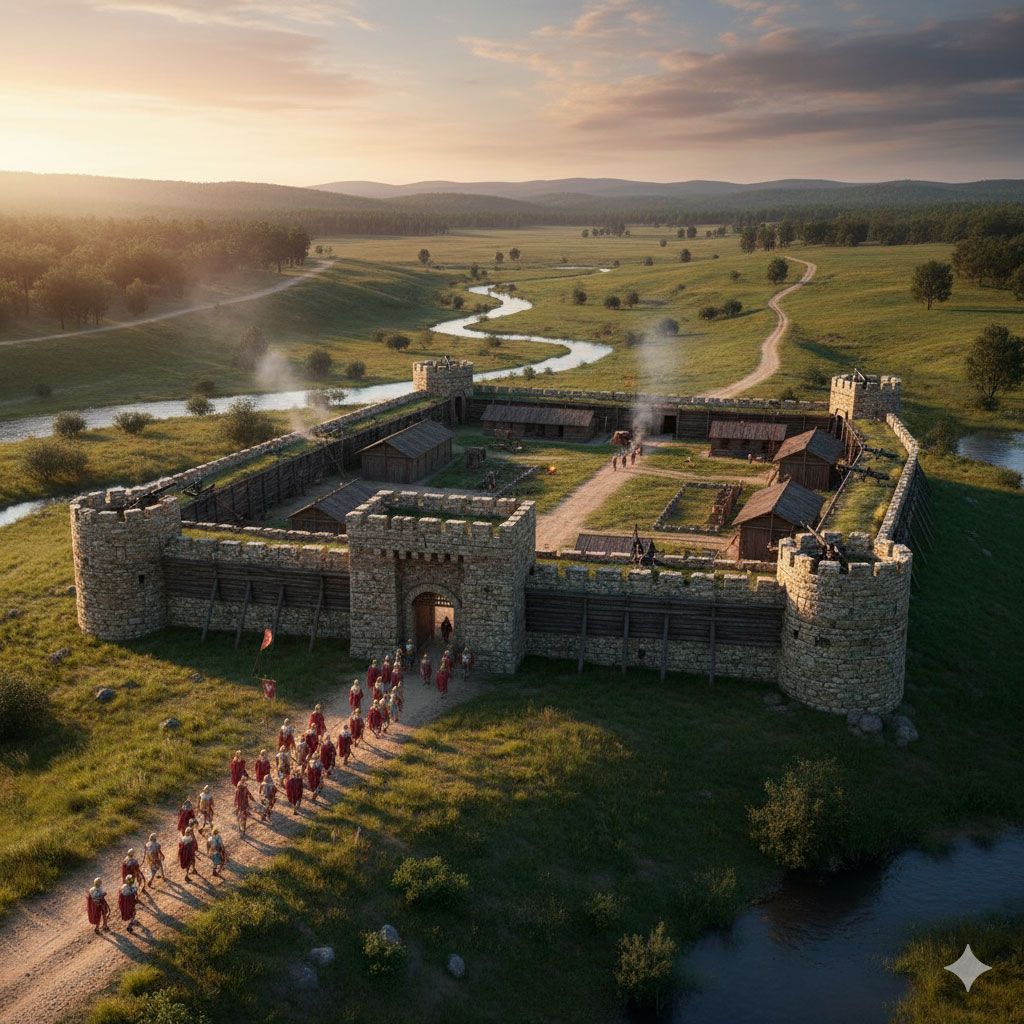
Structure: a city in miniature
The basic model of a castrum was rectangular and arranged in a grid. Two main axes —the Cardo Maximus (north-south) and the Decumanus Maximus (east-west)— crossed at the center and provided orientation without maps. Around that intersection stood the principia, the headquarters that combined administrative, religious and storage functions.
- Principia: central courtyard, basilica for official matters, sacellum for the standards and pay chests.
- Praetorium: the commander's residence.
- Barracks (contubernia): groupings for eight men per tent or room.
- Workshops and storerooms: fabrica, granaries and equipment depots.
- Sanitary facilities: valetudinarium (hospital), latrines and drainage systems.
Defenses and construction techniques
The construction of a camp combined speed and technique. The axes were marked with surveying instruments, a ditch (fossa) was dug and the excavated earth was used to build an embankment (agger) topped by palisades (vallum) and stakes. In some cases the ditch was doubled or V-shaped to make an assault more difficult; special structures were placed around the gates to dissipate the force of enemy charges.
- Site selection: elevated ground, good visibility and access to water.
- Layout: use of the groma and standardized measurements to mark streets and gates.
- Excavation and fortification: fossa, agger and vallum.
- Internal distribution: barracks, official buildings and services in grids.
Thanks to practice and discipline, a trained detachment could erect a castrum in a few hours (3–5 in ideal conditions), with competitions between units to speed the work.
Types of castra according to their permanence
Not all camps were the same: they varied according to the expected duration and purpose.
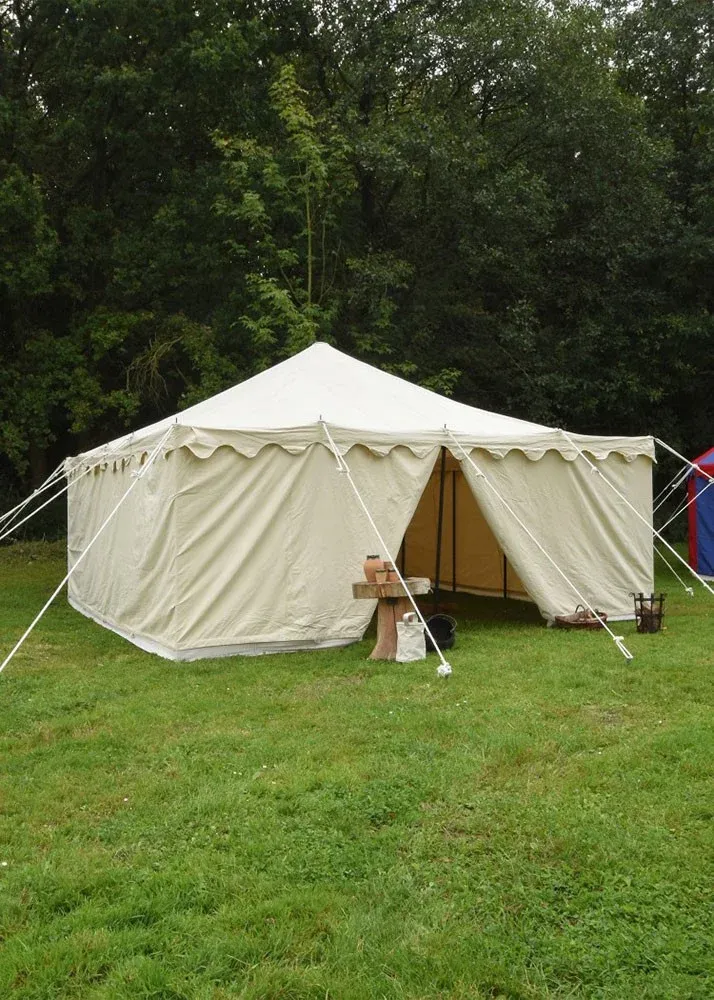
- Castra itineraria: improvised and temporary, erected each night on campaign.
- Castra aestiva: summer stations more elaborate than the itineraria, but not fully permanent.
- Castra stativa or hiberna: fixed or winter fortifications, often with stone walls and durable structures.
- Castra necessaria: emergency solutions for quick shelter in dangerous terrain.
Daily life and discipline
Routine in a castrum was regulated to maintain operational capability:
- Morning: change of guard, exercise, cleaning and weapons inspection.
- Daytime: work in workshops, distribution of supplies and administrative tasks in the principia.
- Night: sentries and patrols; security was considered a priority and effective vigilance was rewarded.
Historical and archaeological impact
The castra were essential for the expansion and maintenance of the Empire: they facilitated the projection of power, army logistics and the Romanization of territories. Many permanent camps eventually transformed into civilian towns, retaining the regular layout of their streets.
Archaeologically they are identified by traces of ditches, agger and regular street patterns; changes in materials (wood to stone) indicate the transformation of a mobile camp into a stable one.
| Type | Characteristics | Typical use |
|---|---|---|
| Castra itineraria | Quick assembly with perishable materials; minimal design for overnight stays and defense. | Mobile campaigns and daily marches. |
| Castra aestiva | Seasonal, more comfort and order than the itineraria, sometimes with sturdier temporary structures. | Camps during favorable seasons (summer). |
| Castra stativa / hiberna | Built in stone or with solid walls; permanent facilities (baths, hospitals). | Fixed garrisons, winter quarters and strategic bases. |
| Castra necessaria | Improvised in emergency situations; minimal defenses and quick to assemble. | Unexpected encounters in hostile terrain. |