
Shopping Cart
There are no more items in your cart
What is Glima?
The Glima is a traditional Nordic wrestling system that combines technique, balance and its own code of honor. Although its roots are associated with Viking warriors, Glima has reached the present day as a sporting and cultural practice in Iceland and other Northern European countries. More than simple "free wrestling", it is a discipline with rules, distinct styles and a history documented in medieval sources.
What is Glima?
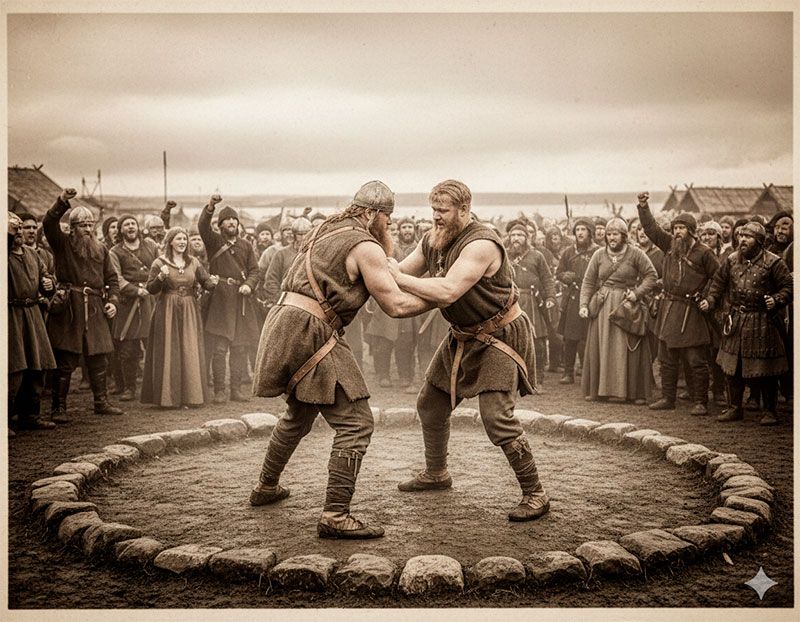
Glima is a Scandinavian grappling martial art that, in Old Norse, can be translated as "flash", alluding to the speed of its techniques. It developed as part of Viking warrior training for unarmed combat situations and to improve fundamental physical skills: posture, reflexes, coordination and tactics. Over time the practice evolved from survival exercises to becoming a sport with recognizable rules and variants.
Origins and historical sources
The earliest references to Glima appear in Scandinavian poetry and chronicles from the 9th century, although the most complete descriptions come from medieval texts such as the Prose Edda and various Icelandic sagas. Legal documents like the Jónsbók (1325) and the Grágás recorded rules and customs related to the practice, confirming that Glima was part of the physical repertoire of Norwegian settlers in Iceland.
Basic principles and code of conduct
Glima is not anarchic fighting; it is governed by principles that prioritize respect, technique and safety. Among its rules and values are:
- Upright posture: competitors keep their backs straight for most of the time, avoiding throwing themselves to the ground.
- Continuous movement: participants walk clockwise around the opponent to encourage initiative and avoid stalemates.
- Ban on brute force: crude pushing or attempts to bring down the opponent by sheer power are frowned upon and penalized.
- Drengskapur: the code of honor that demands respect, integrity and fairness among practitioners.
Techniques and structure
The system is organized into eight main techniques called bragd, from which dozens of throws, sweeps and controls are derived. Notable specific movements include:
- Stigaglima: a pattern of steps and footwork to control the opponent’s angle and balance.
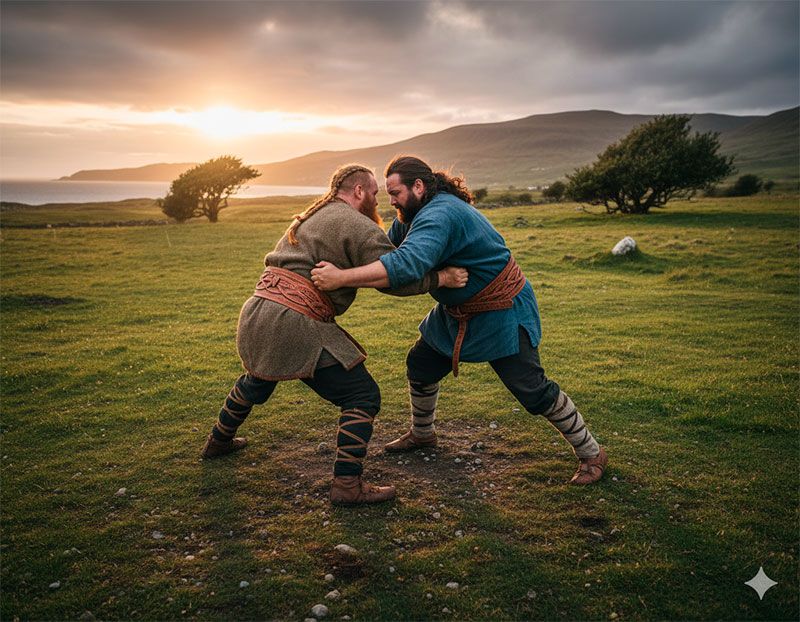
- Brokartök: a traditional style with belts and straps that allow specific grips on the waist and thighs.
- Blocking techniques, joint locks, kicks and strangulations in its combat version.
Variants of Glima
Glima has several modalities, each emphasizing technique or strength to different degrees. The three main ones are:
| Variant | Key characteristics | How victory is decided |
|---|---|---|
| Byxtagsglima | The most popular and considered the national sport in Iceland. Straps are used at the waist and thighs (breeches), and technique prevails over strength. | The one who touches the ground between elbow and knee loses. |
| Livtagsglima | Grip on the upper body area; requires greater physical power alongside technique. | The one who touches the ground with any part of the body except the feet loses. |
| Lösatagsglima | Free modality: grips of choice and greater technical variety; allows more typical hand-to-hand combat moves. | The winner is the one who manages to leave the opponent lying down while remaining standing. |
Traditional training and use in battle
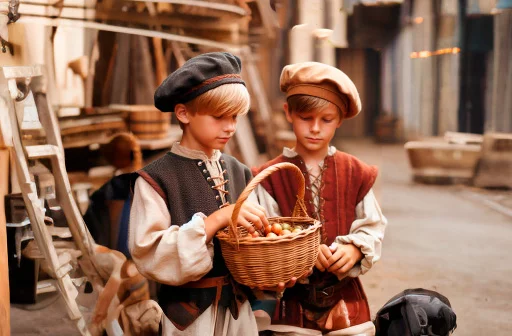
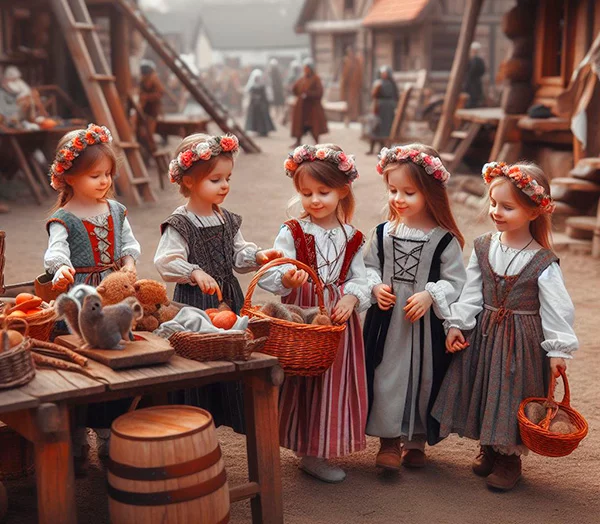
Viking training integrated Glima into daily routines: from an early age children practiced bouts, strength and endurance exercises, and confrontations in adverse conditions (cold, wind). Glima was complemented by armed practices —use of knife, axe, spear and sword— and shield formation drills. Its objective was not only to master grappling techniques but to develop reflexes, balance and rapid decision-making.
Glima today
In the 20th century Glima came to play a sporting and cultural role. Celebrations, exhibitions at international events in the early part of the century and the establishment of clubs have allowed the discipline to survive and adapt, combining modern training methods with respect for traditional rules. It currently attracts both those looking for a technical contact sport and those who want to connect with Viking heritage.
Practical aspects for those interested
- Glima is suitable for different ages and adapts to various technical and physical levels.
- It places special emphasis on posture and injury prevention through technique.
- Practicing it also involves learning its cultural background and the code of honor that accompanies it.
Its evolution from a warrior practice to a regulated and respected discipline is an example of how traditional arts can be preserved and renewed, keeping alive a part of Nordic heritage.