
Shopping Cart
There are no more items in your cart

What is a Chapirón?
The chapirón (from the French chaperon, also known as capirote or capirón) was a head covering characteristic of medieval Europe between the 13th and 15th centuries. It began as a functional hood to protect against cold and rain and eventually became a complex fashion accessory, loaded with social and aesthetic meaning.
Origin and etymology
The word comes from the Latin cappa, meaning cloak or hood, and is documented in France at the end of the 13th century. From there it spread throughout Western Europe and evolved rapidly, both in shape and social use. Although its origin is practical —protection from the elements— it soon acquired connotations of social distinction, becoming a visible marker of status and taste.
Description and physical characteristics
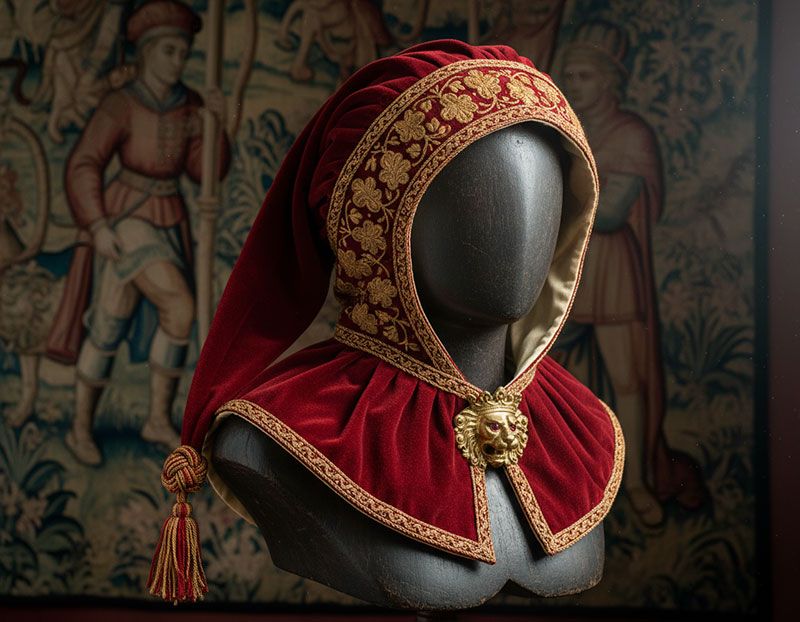
The chapirón is, essentially, a short hood that usually includes a rear extension known as a liripipe. Depending on the design and period, it presented different configurations:
- Closed form: hood with a single opening for the face.
- Open form: a front opening that could be buttoned or left loose.
- Typical elements: patte (tongue), cornette (points) and bourrelet (a roll or padded band decorating the forehead).
Materials varied according to season and social rank:
- Practical uses: wool, linen, sturdy fabrics to protect against cold and rain.
- High-end: silk, taffeta, velvet and cendal (a fine gauze silk), often lined or decorated with gold and enamels.
Evolution through the centuries
13th century — early uses
Initially it was a practical and relatively simple hood. It was placed to cover the head and neck or tied under the chin, protecting from rain and wind.
14th century — stylistic transformation
During the 14th century the chapirón became more ornamental. The rear point (liripipe) was lengthened and variants with turned fronts began to appear. Creative ways of wearing it emerged: some put the head directly through the face opening instead of from the nape, creating intentional folds and drapery.
15th century — peak and diversification
In the 15th century the garment reached its greatest splendor, especially in the Franco-Burgundian courts. Variants multiplied: high crests, curved shapes, and the use of the bourrelet as a decorative element adding volume. By the end of the century some professional groups, such as legal scholars, adopted their own versions as a symbol of distinction.
Social and cultural use
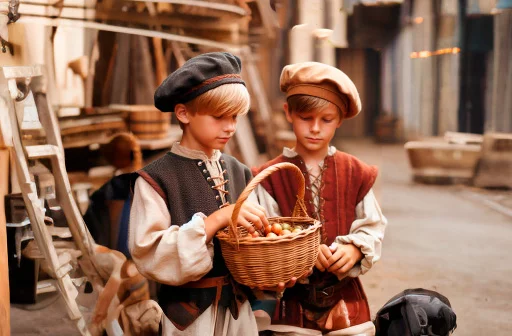
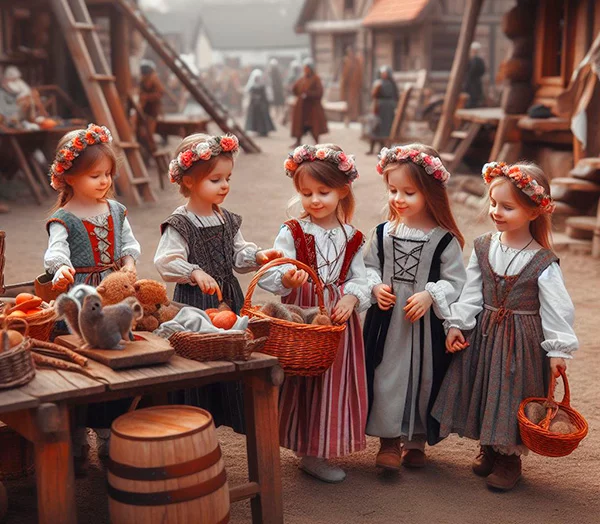
The chapirón was worn by all social classes, but its shape and decoration changed according to economic resources:
- Commoners: simple, functional versions.
- Nobility: pieces in fine fabrics, with embroidery and metal appliqués.
- Scholars and jurists: adaptations that emphasized prestige and professional identity.
On some occasions it also formed part of ceremonial or mourning attire, combined with other garments such as cloaks and headdresses.
Decoration and techniques
Ornamentation reached very elaborate levels among the nobility. Among the most frequent embellishments are:
- Metals and enamels: small gold-enamel appliqués in floral or geometric motifs.
- Embroidery and pearls: inlays that enhanced shine and perceived value.
- Rolls and bands (bourrelet) to add volume and frame the forehead.
How to identify a chaperon in art and visual sources
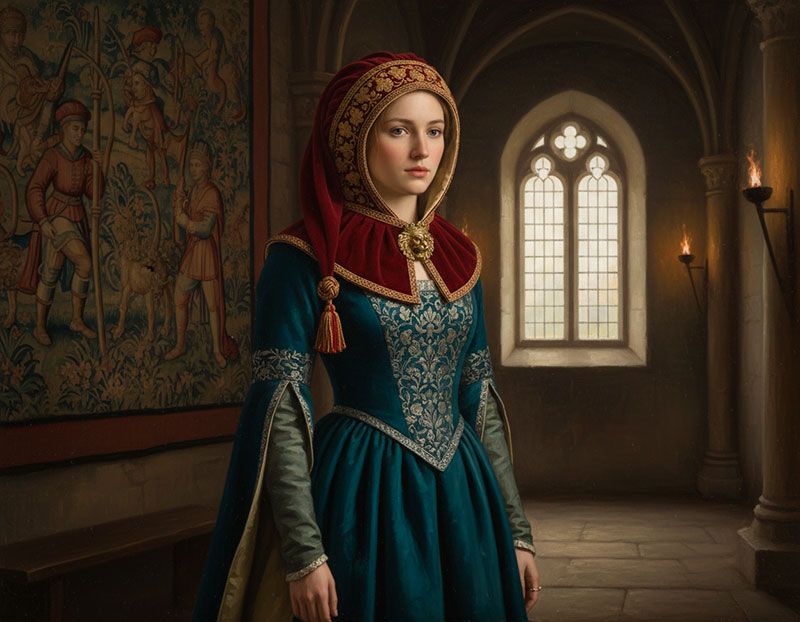
If you are interested in recognizing this garment in paintings or manuscripts, look for:
- The presence of a short hood with a tail or posterior point (liripipe).
- Volumes around the forehead (possible bourrelet).
- Changes in shape: sometimes the piece appears with the points turned up or coiled over the shoulder.
- Luxurious materials depicted (sheen, gold details) when representing nobility.
| Period | Predominant form | Social use |
|---|---|---|
| 13th century | Simple, functional hood | Popular and practical |
| 14th century | Elongated liripipe, turned-front styles | Both practical and ornamental |
| 15th century | Complex variants: bourrelet, crests | Court fashion and a status symbol |
In simple terms, the chapirón is a medieval hood that went from being a practical solution for the climate to a fashion element that communicated social position, taste and cultural belonging. Its multiple variants and frequent representation in art make it a key piece for understanding Western medieval dress.