
Shopping Cart
There are no more items in your cart
What is a Talaris tunic?
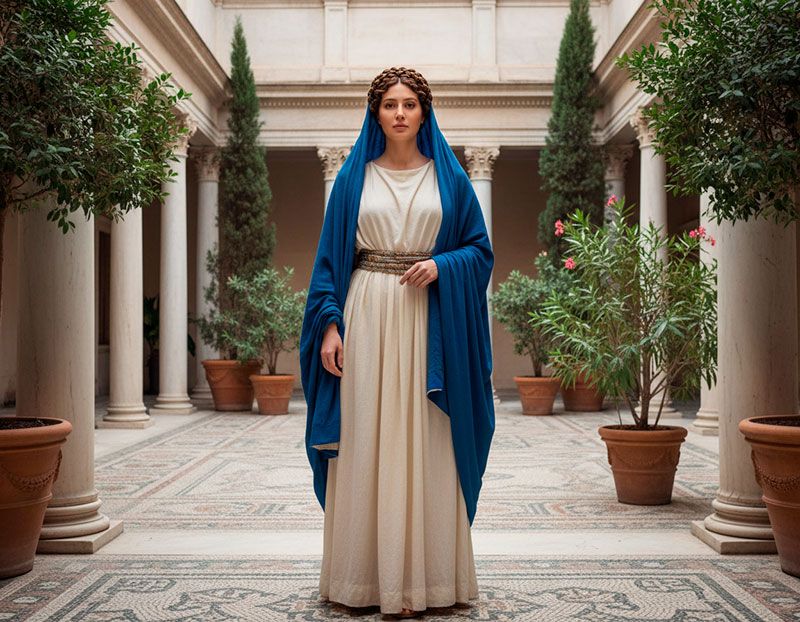
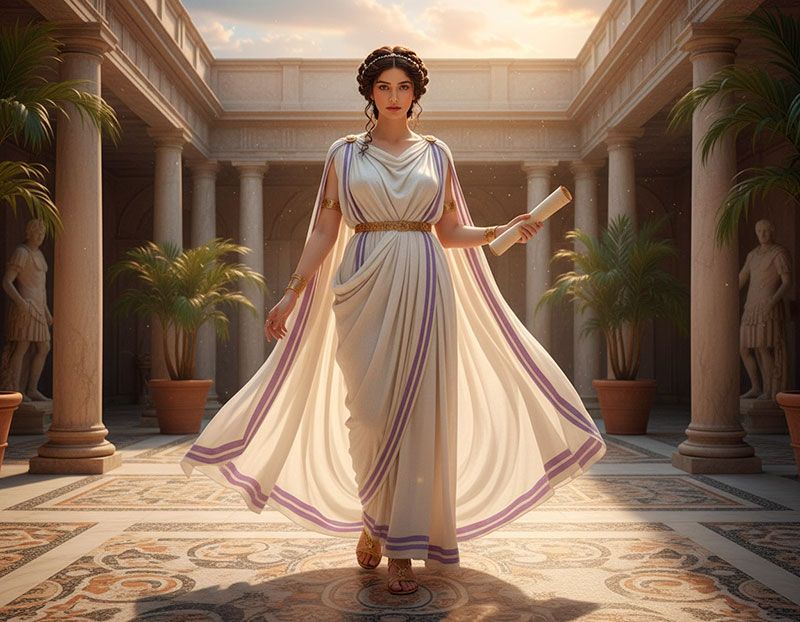
The tunic talaris is a characteristic garment of Roman dress notable for its length: it reaches the ankles or even the feet. More than a simple piece of clothing, it functioned as a social and gender marker during Antiquity, undergoing transformations that led it to become a ceremonial and liturgical garment in later periods.
Simple definition
The word talaris comes from the Latin root related to the heels (tali), and describes a long tunic that contrasts with the more common shorter tunics (up to the knee or calf). It was used from the late Roman Republic and became established during the Empire, with variants and adaptations over the centuries.
Main features
- Length: reaches the ankles or the feet, fully covering the legs.
- Shape: initially made from two pieces of fabric sewn at the sides; over time a version with sewn-in sleeves appeared.
- Sleeves: could be sleeveless, short-sleeved, or long-sleeved down to the wrist (known as tunica talaris et manicata).
- Fit: usually belted with a belt called a cingulum, which marked the waist and allowed greater mobility.
Construction elements
- Two sewn side panels with openings for the head and arms.
- Possible incorporation of pleats, gathers or embroidery on garments of higher status.
- Finishes and decoration dependent on social rank: trims, dyed bands or embroidered details.
Materials and color
Tunics talaris were made primarily of wool and linen. The choice of material depended on the climate, the intended use and the economic status of the wearer:
- Wool: the most common material; warm and accessible.
- Linen: associated with greater luxury and prestige, especially in warm climates and for fine garments.
- Dyes and embroidery: bright colors and ornamentation implied higher social rank; some colors were regulated by sumptuary rules.
Social use and meaning
The tunic talaris was closely linked to gender identity and status:
- Roman women: it was the usual option in everyday and formal female dress; the length reaffirmed the expected role and modesty.
- Men: predominantly wore shorter tunics, although in ritual, ceremonial or religious contexts some high-ranking men could wear long versions.
- Sign of status: the quality of the fabric, the color and accessories communicated the wearer’s social position.
Historical evolution
The tunic talaris was not static: it appears prominently at the end of the Republic and persists during the Empire, acquiring variants. By the 4th century AD the long-sleeved version became popular, influenced by climate changes, cultural contacts with northern peoples and stylistic transformations within the Empire itself.
Transition to liturgical dress
As the Empire changed and the Christian Church gained social weight, the long form of the tunic was adapted for religious uses. The tunic talaris evolved into what the Middle Ages called the alba, a long white liturgical garment that retained the talaris silhouette but acquired new symbolic meanings: purity, religious service and separation from profane dress.
Why it matters today
- It helps us understand how clothing communicated identity and social hierarchy in Rome.
- It illustrates the cultural continuity between Roman civilian garments and medieval ecclesiastical vestments.
- It is a clear example of how fashion responds to practical factors (climate, materials) and symbolic factors (norms, religion).
| Variant | Length | Sleeves | Period | Typical use |
|---|---|---|---|---|
| Tunica talaris | To the ankles | Sleeveless or short sleeves | Late Republic – Empire | Female attire and high-status dress |
| Tunica talaris et manicata | To the ankles | Long sleeves to the wrist | 4th century onward | Civil fashion, ceremonial and religious use |
| Alba (adaptation) | To the ankles | Variable, often long | Middle Ages | Christian liturgical vestment |
Key takeaways
- The tunic talaris is, above all, a long Roman tunic that was distinguished by its length and social context.
- It was both everyday female clothing and a ceremonial garment and, later, an ecclesiastical vestment.
- Its evolution shows the interaction between fashion, politics, religion and cultural contact in Mediterranean history.