
Shopping Cart
There are no more items in your cart


What is a Laticlavia Tunic?
The laticlavia tunic was a distinctive garment of Ancient Rome that visibly and normatively identified members of the senatorial elite. More than a mere shirt, its design and color reflected political hierarchy, social privileges, and rules of etiquette that crossed Roman public and private life.
What characterizes it?
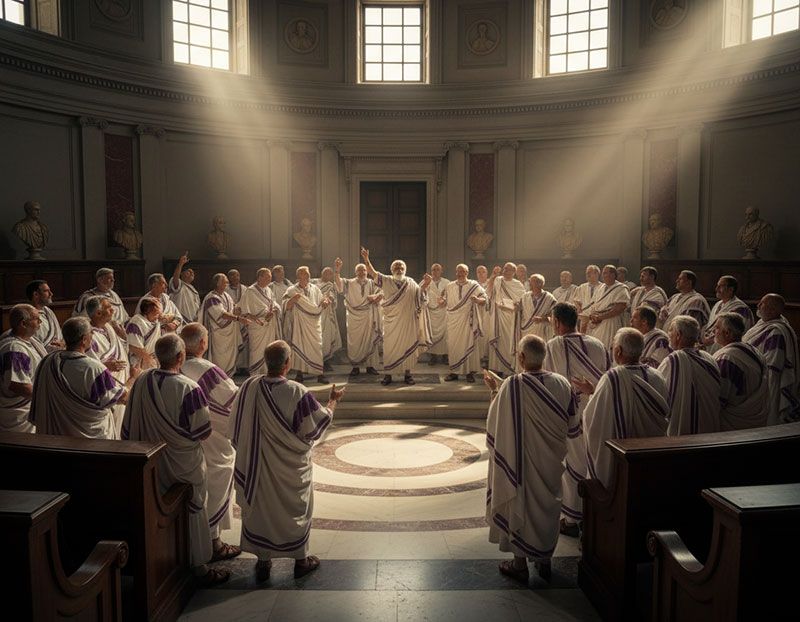
The most recognizable feature of the laticlavia tunic is the clavi —vertical purple stripes— but not all stripes are the same. The laticlavia is defined by:
- Broad stripe(s) of purple (hence latus clavus, “broad stripe”).
- Light background, typically wool in its natural shade (white or off-white), which makes the clavi stand out.
- Simple cut: a loose tunic, generally made from two rectangular pieces sewn at the sides, with or without short sleeves.
- Regulated use: reserved for senators and certain high officials; its display adhered to social and legal norms.

Origin and historical context
The basic Roman tunic was the everyday garment of men and women. Over time, variations in decoration and color served as a visual code for social stratification. The laticlavia appears as a formal distinction in the Republic and becomes consolidated during the High Empire as a senatorial emblem.
The purple dye used in the clavi came from expensive sources (traditionally associated with Tyrian purple, extracted from mollusks such as the murex), so the mere presence of those bands implied a cost and economic status.
How it was worn and when
- In public and at official events: the laticlavia tunic had to be combined with the toga on formal occasions, magistracies, and public appearances.
- In private or at home: the senator could remain in the tunic without a toga, thus displaying rank more directly.
- Youth and variations: children of senatorial families or magistrates in office could wear similar elements on the toga praetexta (purple-edged toga), but the laticlavia was the exclusively senatorial tunic for adults.
Symbolism and social function
The laticlavia not only communicated wealth but functioned as a legal and cultural declaration: the wearer was legitimized to act on behalf of the senatorial class and had access to privileges that the ordinary citizen did not possess. In a society where visual appearance was key to political interaction, the garment served as an immediate reminder of authority.
Differences from other elite tunics
There are other variants worth distinguishing:
- Angusticlavia: tunic with narrow purple stripes, common among the equestrian class (equites) and some judges.
- Toga praetexta: toga with a purple border worn by magistrates and young patricians —related, but distinct because it is a toga and not a simple tunic.
- Ornamented tunics (e.g., palmata): featured gold embroidery or special motifs for triumphators or distinguished military offices.
Rules and ambiguities
There is not always consensus on design details: ancient sources and artistic representations show variations —one or two stripes, embroidered or woven— and the archaeological record does not fully resolve the exact form of the clavi in every case. What is clear is that the width of the stripe distinguished the laticlavia from other variants.
| Type | Width of clavi | Color | Wearers |
|---|---|---|---|
| Laticlavia | Broad | Purple | Senators and high patricians |
| Angusticlavia | Narrow | Purple | Equites, judges |
| Common tunic | No clavi | White/undyed | Citizens and legions |
| Palmata / ornamented | Variable | Purple, silk, golds | Generals and special dignitaries |
Legacy and recreation
Today, the laticlavia tunic is a recurring motif in historical reconstructions, museums, and studies on ancient dress. Its main value lies in how it exemplifies the use of fashion as a political and social instrument: a piece of cloth that, by its color and form, materialized Roman hierarchy.