
Shopping Cart
There are no more items in your cart

What is a Smidir?
The term smidir (from Old Norse smiðr) designated a multifaceted craftsman within Viking society: not merely a blacksmith, but a trade that encompassed the manufacture, repair and decoration of objects essential for everyday life and warfare. Below is a clear and instructive explanation of what a smidir was, which skills they mastered, which tools they used and why their imprint endures in the archaeology and material culture of northern Europe.
Who was the smidir?
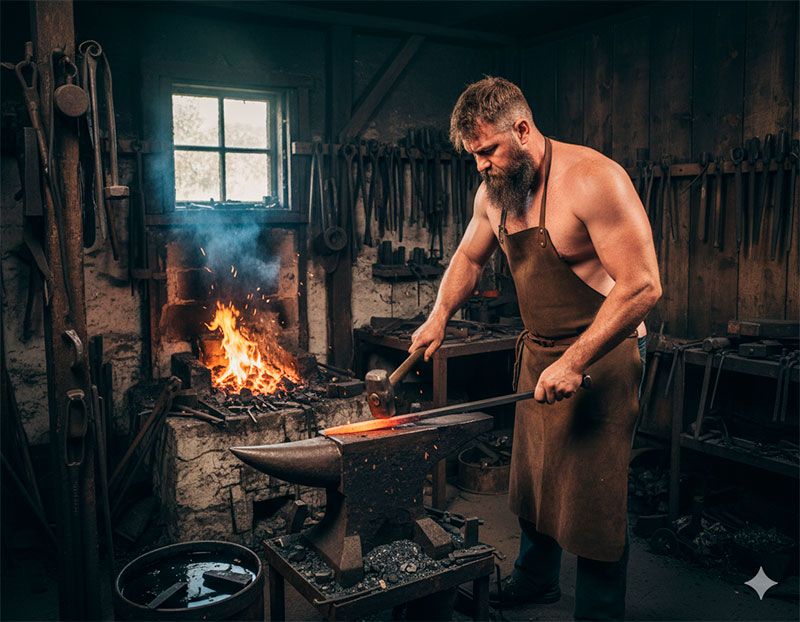
The smidir held a position of great prestige within Norse communities. Their name functioned as an umbrella term: there were many types of smiðr depending on the material or function. They were a central figure for the survival and economic power of the settlement, since their work ranged from weapons to vessels and jewelry.
Social context
- They formed part of a labour hierarchy recognized by the community.
- Their work could be both practical (tools, ship repairs) and decorative (jewelry, engravings).
- In some cases, a smidir's skill could be associated with family prestige and the transmission of knowledge across generations.
Areas of specialization
The word smiðr was combined with a prefix to specify the branch: for example, trésmiðr (carpenter), gullsmiðr (goldsmith) or iarnsmiðr (iron-smith). This illustrates that the concept was not exclusive to metallurgy, but to any advanced craft.
- Forge and weapons: swords, axes, spearheads and armor components such as rivets or plates.
- Naval carpentry: repair and construction of longships, keel and prow fittings.
- House construction: fittings, hardware and tools for the communal halls (skali).
- Jewelry and ornament: brooches, necklaces, rings using fine techniques such as filigree or granulation.
- Intellectual/artistic trades: metaphorical uses of the term for poetry or rhetoric (lióðasmiðr, galdasmiðr).
Main techniques and knowledge
The smidir combined manual skill with advanced technical knowledge of how materials behave under heat and stress:
- Casting: managing furnaces and the flow of molten metal.
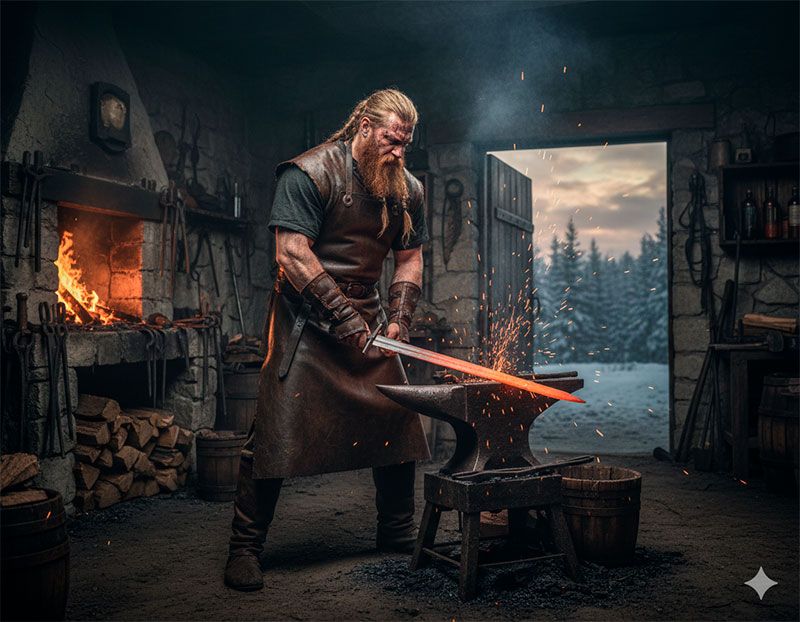
- Forging: hammering on an anvil to shape and heat treatment to harden.
- Pattern welding (patterned welding): joining layers of different metals to obtain stronger blades with decorative grain patterns.
- Decoration: inlaying, niello, granulation and engraving to embellish pieces.
- Woodworking: joinery, carving and finishes for ships and buildings.
Tools of the trade
The tools ranged from simple to specialized; their correct selection and maintenance defined the quality of the work.
- Forge and rudimentary blowpipes to reach working temperatures.
- Anvil and hammers of various sizes.
- Tongs, molds, chisels and gouges.
- Files, sharpening stones and gravers for finishing.
- Carpentry tools: adzes, saws and hand drills.
Archaeological identification
How do researchers recognize a smidir workshop at sites? They look for:
- Remains of furnaces or contexts with slag and forging residues.
- Sets of related tools found in the same layer.
- Unfinished pieces that show work processes (swords at different stages, loose mail rings, ornamental fragments).
- Traces of repair on everyday objects that indicate specialized intervention.
Cultural and symbolic significance
The figure of the smidir appears in Norse myths and symbolism: Thor's hammer (Mjölnir) and stories about dwarf smiths underline the religious and cultural connection between smithing and the sacred. Moreover, the amulets and ornamental pieces produced by smidirs had both utilitarian and identity value.
| Type of smidir | Main material | Typical products |
|---|---|---|
| Iarnsmiðr | Iron/Steel | Swords, axes, spearheads, nails |
| Gullsmiðr | Gold and silver | Jewelry, brooches, ornaments |
| Trésmiðr | Wood | Ships, houses, furniture |
The smidir was, therefore, much more than "a blacksmith": their craft articulated technique, aesthetics and function within Viking culture, leaving a visible imprint on recovered objects and on the material tradition of northern Europe.