
Shopping Cart
There are no more items in your cart


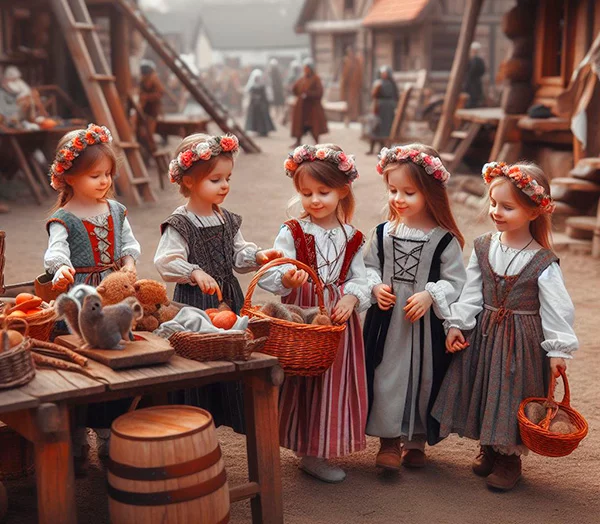
What is a bodice?
A bodice is a sleeveless, fitted women's garment that cinches at the waist and covers the torso from the waist upward. Traditionally it fastens with lacing, ribbons, or hooks, and its purpose combines functionality —providing bust support— with a strong aesthetic component. Today it coexists in historical, fashion, and everyday contexts, with versions ranging from ornamental to comfortable and functional.
Main characteristics
- Design and fit: close-fitting cut, often a low neckline and armholes shaped to allow movement. Closures can be at the front, side, or back using lacing, ties, or simple fastenings.
- Function: moderate support and bust enhancement without the extreme rigidity of a classic corset. Can be worn as underwear or as a visible outer garment.
- Materials: from historical fabrics (velvet, brocade, silk, heavy cotton) to modern blends with elastane for greater comfort.
- Construction: includes internal reinforcements, interfacings, and, in more structured models, flexible boning that keeps the shape without constricting the figure.
- Aesthetics: embroidery, bows, metal eyelets, and decorative details that can reflect historical eras or contemporary trends.
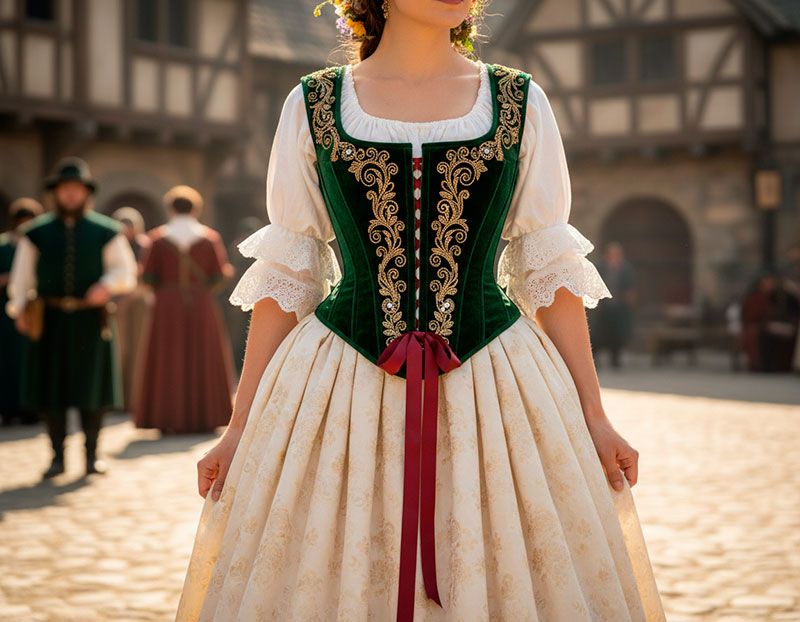
Bodice vs. corset: what’s the difference?
At first glance the two garments look similar because of their fitted silhouette, but they have different goals and constructions. Below are the essential differences to understand when we are talking about a bodice and when about a corset.
- Support: the bodice offers light to moderate support; the corset applies intense support and marked shaping.
- Structure: the bodice is usually less rigid, with fewer panels and without mandatory steel boning; the corset incorporates boning (stays) and a construction that shapes the waist.
- Use: the bodice can be visible as an outer garment; historically the corset was an inner shaping garment.
| Characteristic | Bodice | Corset |
|---|---|---|
| Support | Light to moderate | Strong, intense shaping |
| Structure | Fewer panels, optional flexible boning | Rigid boning / stays for shaping |
| Visibility | Frequently visible | Primarily an undergarment |
| Comfort | Greater freedom of movement | More restrictive |
Brief history and evolution
The bodice has a long history in European fashion. From the Middle Ages and the Renaissance it was a common item in the female wardrobe, worn by both working-class women and those of the upper classes, though with very different materials and ornamentation. In past centuries it was known as cuerpo or corpecico, and its tailoring indicated social status: rich fabrics and decorations for the nobility; simple, durable textiles for the working population.
Over time its presence in fashion changed: in some eras it became more hidden and in others it reemerged as a visible garment. In recent decades it has experienced a resurgence, integrating into vintage trends, haute couture and street style, adapted to contemporary demands for comfort and aesthetics.
The medieval bodice
- Typical materials: velvet, brocades, leather, and sturdy cotton.
- Closures: lacing or ties that allowed the piece to be adjusted to the torso.
- Details: embroidery, metal eyelets, and reinforced seams reflecting the fashions of each region and era.
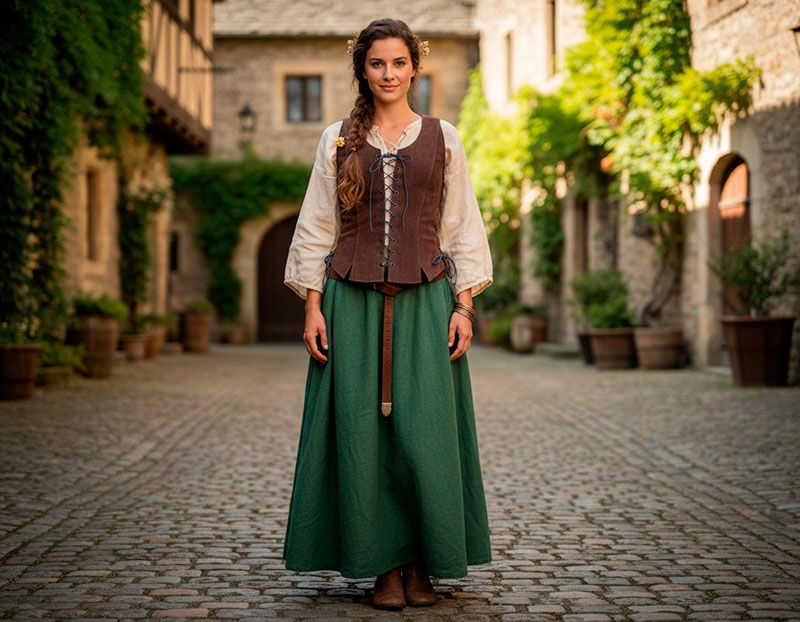
Construction and sewing technique
Making a bodice requires patternmaking and sewing knowledge. Among the most important elements are:
- Fitted pattern: cuts that respect the shape of the torso and allow the garment to hang harmoniously.
- Reinforcements: interfacings and linings that provide stability without sacrificing comfort.
- Eyelets and lacing: for a secure, adjustable closure; they should be reinforced to prevent wear.
- Boning: some models use flexible boning (plastic or tempered steel) to maintain shape.
- Finishes: trims, lace edgings, and reinforcements at seams subject to stress.
Current uses and trends
- Historical reenactment: essential for events and performances seeking aesthetic fidelity.
- Contemporary fashion: bodices used as outer tops, paired with blazers, skirts, or structured dresses.
- Comfort and wearability: versions designed for daily use that prioritize breathable fabrics and flexible boning.
- Sustainability: growing interest in recycled materials, ethical production, and renewed artisanal techniques.
Practical tips for choosing and wearing a bodice
- Find the right fit: it should be snug but allow for breathing and movement.
- Check points of tension (eyelets and seams) to anticipate durability.
- Choose materials appropriate to the use: stiffer fabrics for stage productions or events; soft and stretchy for prolonged wear.
- If you plan to wear it as an outer garment, layer with lightweight pieces to balance proportions and comfort.
The bodice remains a garment that bridges tradition and modernity: versatile, with numerous historical and contemporary variations, it offers alternatives for those seeking everything from historical authenticity to contemporary fashion choices that respect comfort.