
Shopping Cart
There are no more items in your cart


What is a Jaima?
A jaima is much more than a tent: it is a portable dwelling, a shelter from the elements and a cultural symbol of the nomadic peoples of North Africa. Originating in Berber and Bedouin communities, it combines a practical desert-oriented design with a deep social meaning that shapes family and community life.
Definition and etymology
The word jaima comes from the Arabic haymah. In Spanish both spellings (with j or with h) are accepted, and the Royal Spanish Academy defines it as a tent that serves as a dwelling for nomadic peoples of North Africa. However, its scope goes beyond the simple physical structure: for many communities the jaima is synonymous with home, gathering and protection.
Composition and structure
Although it may outwardly seem like a simple construction, the jaima is carefully designed to respond to the extreme conditions of the desert.
- Traditional materials: camel hair, goat hair, plant fibers such as esparto or palmetto. These weavings insulate from daytime heat and retain warmth at night.
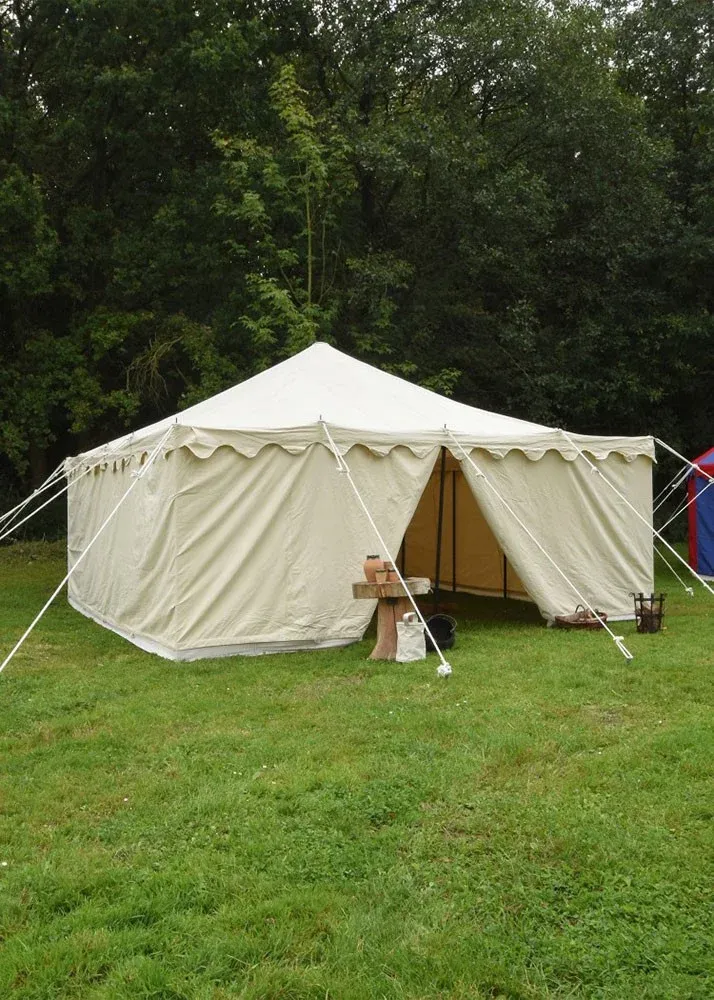
- Support and shape: a central mast and several poles at the same height hold the canvas that forms the walls and roof. The tension of the fabric and the shape help deflect the wind.
- Climatic orientation: the entrance is usually placed opposite the prevailing wind to minimize the entry of sand and rain.
- Insulation: a well-tensioned roof and natural materials provide controlled ventilation and thermal insulation without the need for complex technologies.
The jaima in daily life
Most family life takes place inside the jaima. Its uses and organization respond to the group's economy and social relations:
- Multifunctional space: sleeping, eating, receiving guests, praying and carrying out domestic tasks.
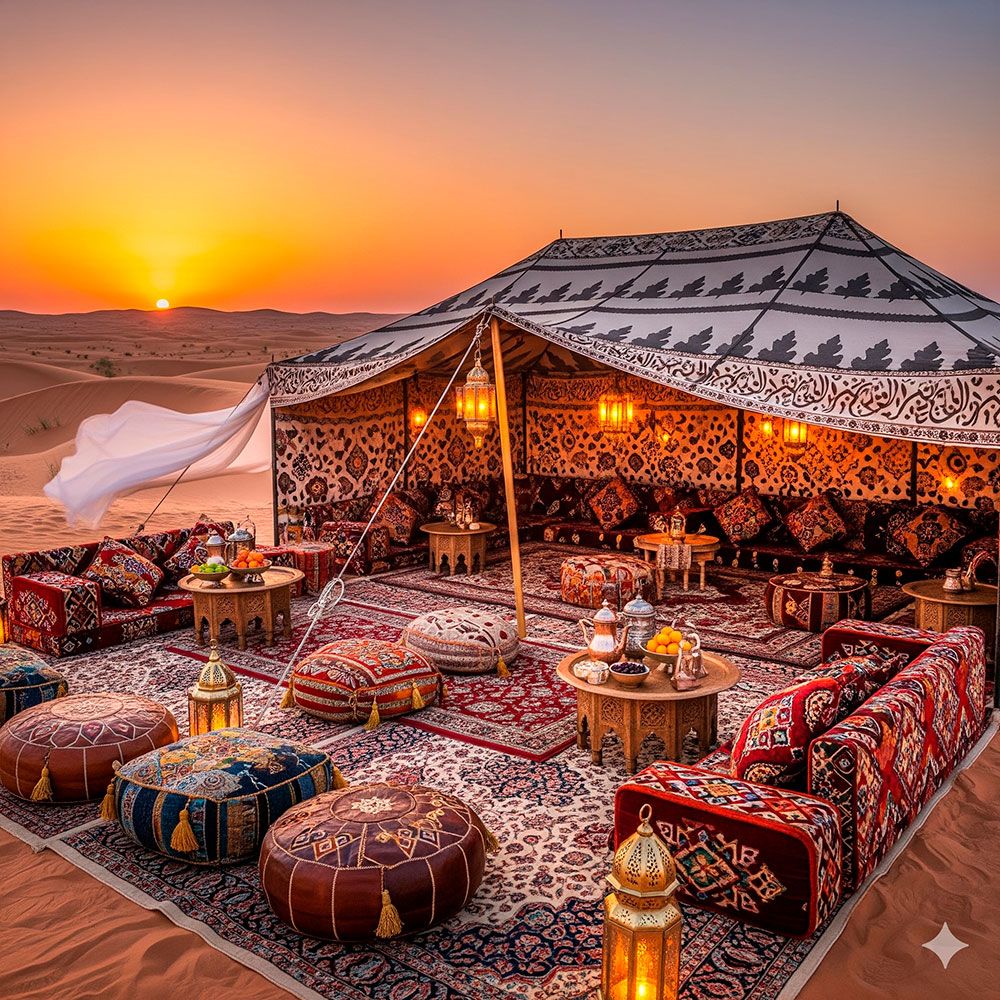
- Interior layout: floor covered with rugs and blankets; chests and household goods arranged along the walls; areas differentiated for men, women and children according to local customs.
- Cooking and food preparation: traditionally cooking is done outdoors, sometimes burying pots to cook under the sand or using open fires near the jaima.
- Social cohesion: the jaima functions as a focal point for gatherings: celebrations, community consultations, family ceremonies.
Modern variants and adaptations
Over time the traditional jaima has received adaptations and new uses, especially for tourism or events. There are three general models that maintain the Berber aesthetic but differ in comfort:
- Standard: essential, authentic experience; basic comfort and shared facilities.
- Superior: improved insulation, carefully curated Berber decoration and semi-private services.
- Luxury: modern comforts (private bathroom, large beds, climate control), while maintaining the traditional aesthetic envelope.
Contemporary uses
Although its origin is domestic, today the jaima has diverse applications:
- Temporary residence for nomads and shepherds in rural areas.
- Space for family ceremonies (weddings, gatherings, funerals) in traditional contexts.
- Ornamental and functional installation at outdoor events: themed dinners, cultural festivals and recreational activities.
Cultural significance
Beyond its technical function, the jaima is a heritage symbol: it embodies ancestral knowledge of adapting to the environment, weaving and assembly techniques, and a form of social organization that values mobility and communal living. For many poets and storytellers of the Sahara, the jaima is the physical representation of family and hospitality.
Assembly, maintenance and practical tips
Assembling a jaima requires practice and coordination. Some key points:
- Assembly strategy: place the main poles first and gradually tension the fabric to avoid deformations.
- Orientation: position the entrance opposite the prevailing wind.
- Maintenance: ventilate regularly, repair tears and retension ropes; natural fabrics require care to avoid moisture and pests.
- Modern adaptations: use of synthetic, waterproof tarpaulins in structures intended for events or tourism to increase durability and comfort.
| Type | Amenities | Typical use | Insulation |
|---|---|---|---|
| Standard | Basic (blankets, simple beds) | Nomadic life, modest camps | High, thanks to natural fibers |
| Superior | Improved insulation, semi-private bathrooms | Rural tourism and extended stays | Very good, with modern enhancements |
| Luxury | Private bathroom, climate control and decor | Events, premium tourist experiences | Optimized with contemporary materials |