
Shopping Cart
There are no more items in your cart
What is a Drakkar?
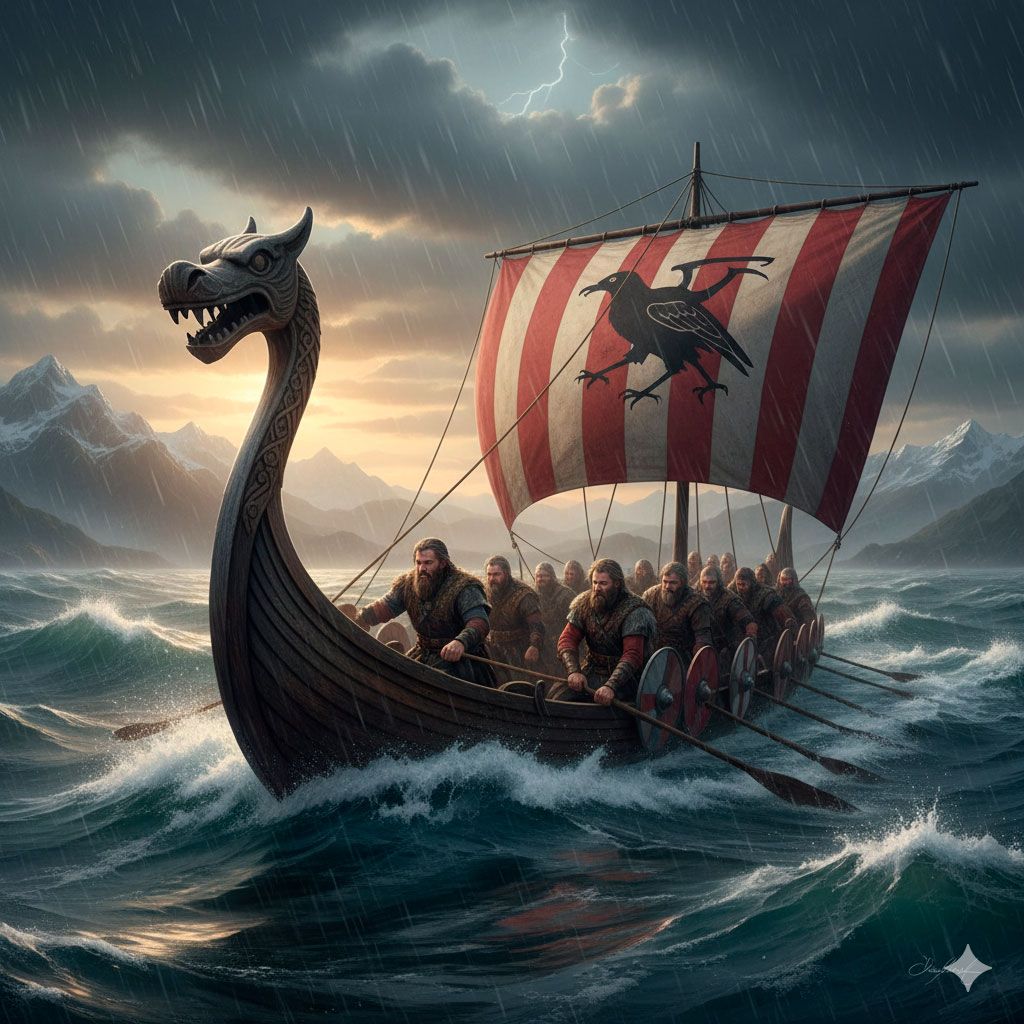
The drakkar is, for many people, the most evocative image of the Viking Age: a long, sleek ship with a dragon head on the bow, capable of crossing open seas, ascending rivers and landing directly on beaches. More than a symbol, it was a practical and versatile naval solution that drove the expansion, trade and raids of the Norse peoples between the 8th and 11th centuries.
What is a drakkar?
A drakkar—also referred to in Norse sources as långskip or drekar—is a type of long Viking ship designed mainly for warfare and expeditions. Its design prioritized speed, maneuverability and shallow draft, which allowed Viking seafarers to operate effectively on the open ocean and in inland waters.
Origin of the name and its iconography
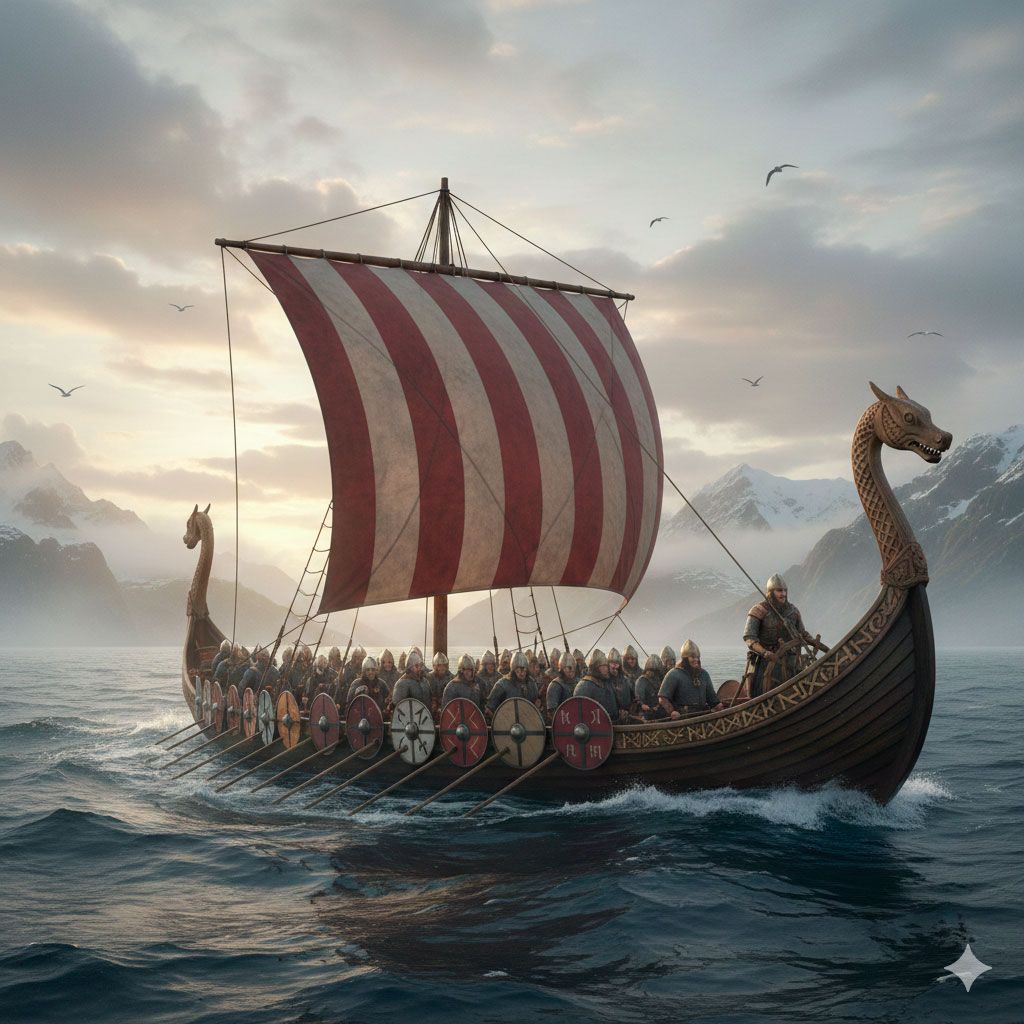
The word comes from Old Icelandic drekar (plural of dreki, “dragon”). The carved figureheads on the bow—dragons, serpents or sea monsters—served practical and symbolic purposes: to intimidate enemies, reinforce the ship’s identity and, according to Norse mythology, protect against sea creatures. The symmetry between bow and stern allowed maneuvering without having to turn the hull, a tactical advantage in sudden attacks and quick retreats.
Design and construction: why they were innovative
Drakkars combined lightness and strength. Their hull was built in clinker or lapstrake style, with overlapping oak planks fastened with pegs and iron rivets. The absence of rigid frames in some techniques allowed the hull to flex with the waves, which increased durability in cold, rough seas.
- Main material: oak (overlapping planks).
- Waterproofing: moss, wool, animal hair and tar in the seams.
- Mast and sail: a central mast with a rectangular sail of reinforced wool.
- Rudder: a stern oar acted as a rudder on the starboard side.
Propulsion and performance
Propulsion combined oars and sail. Depending on size, a drakkar could carry between 30 and 100 sailors/rowers; the number of oars ranged from a few dozen to more than sixty. With favorable wind, these vessels reached notable speeds, estimated between 14 and 17 knots (about 26–31 km/h) in replicas and reconstructed historical records.
Typical dimensions and specifications
| Characteristic | Typical detail |
|---|---|
| Length | Approximately 17–35 m (archaeological examples and replicas) |
| Beam | Around 4–8 m |
| Draft | Very shallow, often less than 2.5 m, allowing navigation in rivers and close approaches to beaches |
| Capacity | Between 30 and 100 people, plus cargo or horses depending on the design |
| Top speed | 14–17 knots in favorable conditions |
| Primary materials | Oak for the hull; reinforced wool sail, leather and iron rivets |
Uses: more than warships
Beyond their role as attack vessels, drakkars were multifunctional platforms:
- Raids and combat: rapid approach to the coast and disembarkation of warriors.
- Exploration and settlement: they enabled voyages to Iceland, Greenland and even Newfoundland (Vinland).
- Trade and transport: some designs could carry goods, livestock or horses.
- Fishing and communication: used on coastal and river routes.
Related models and variants
- Snekkar: larger ocean-going warship, with an ornamented bow and a large crew.
- Knarr: broad, sturdy vessel for trade and colonization; used on voyages to Iceland and Greenland.
- Karv: small and maneuverable, for coastal defense.
Modern reconstructions and legacy
Contemporary projects have replicated ancient techniques to understand their performance. A recent example is the Draken Harald Hårfagre, a modern replica that used clinker construction and demonstrated that these ships remain effective on transatlantic crossings. Archaeological finds—such as those at Roskilde—confirm the sophistication of Norse naval engineering.
Historical significance
The drakkar not only facilitated conquests and plundering; it transformed connectivity across the North Atlantic and European rivers, enabling human movement, cultural exchange and large-scale trade. Its practical and elegant design made it a key instrument in the Viking expansion and an enduring symbol of the Nordic medieval era.