
Shopping Cart
There are no more items in your cart
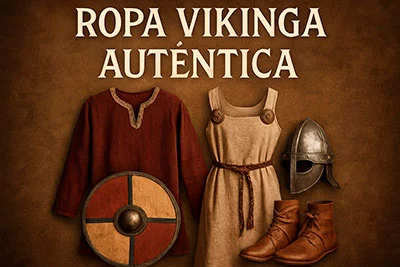
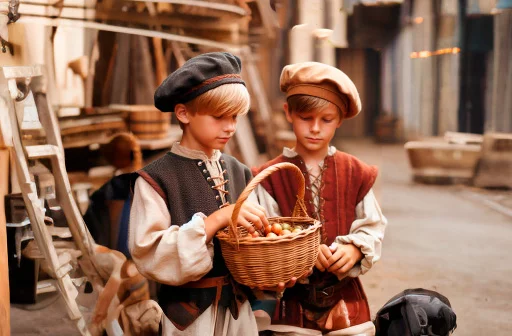
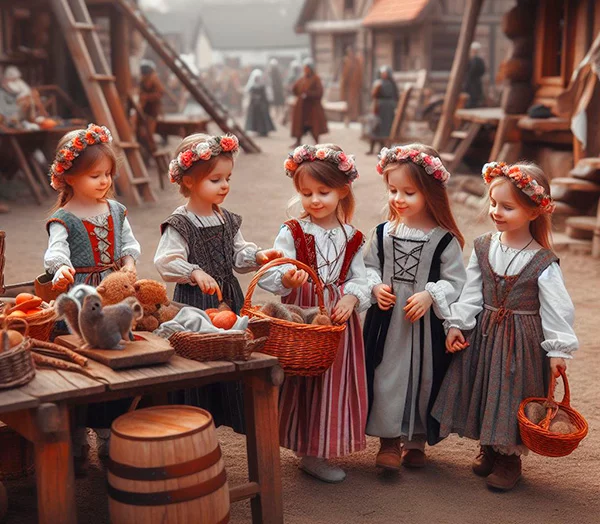
What is the medieval huke?
The medieval huca (also spelled huque or heucke) was a characteristic garment of the 14th and 15th centuries, easy to recognize by its simple construction and its presence in both military and civilian contexts. Its evolution reflects social, aesthetic and technical changes in late medieval dress.
Technical description: what was a huca like?
In its most basic form, the huca consisted of two rectangular panels joined at the shoulders that fell to form an open body, without full sleeves. Depending on the cut and use, it could:
- be belted at the waist with a belt or sash;
- have lappets that simulated sleeves but were not fully sewn on;
- initially include a hood, which over time disappeared in civilian versions;
- vary in length: longer on older people or those of higher rank, shorter on young fashion followers.
Typical materials and decoration included fine cloths and rich linings such as samite, silk or scarlet fabrics, and trims with fine furs. Edges could be scalloped and the garment often bore heraldic or religious adornments.
The most common colors were green, scarlet and blue, used both for aesthetic reasons and for identification.
Social context and uses
The huca is documented in very diverse contexts:
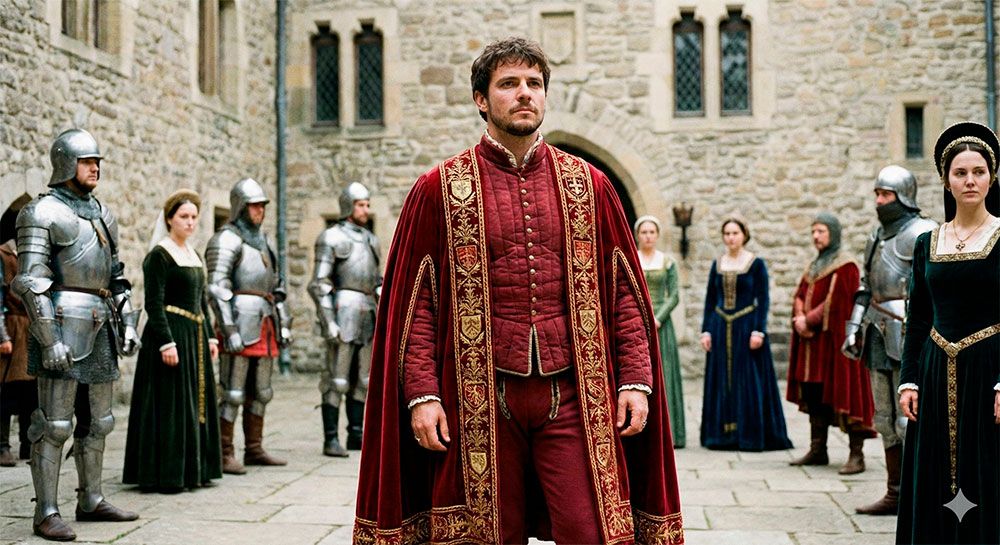
- Military and tournament: worn over armor by ladies and, later, by men; frequently decorated with heraldic emblems to identify knights, pages or heralds in combat and ceremonies.
- Civil and everyday: formed part of urban dress and even women's trousseaux; in inventories it appears as a valuable garment in the clothing of widows or ladies.
- Regulated display: certain official figures (kings of arms, heralds) received hucas lined or decorated as part of their insignia.
Documentary examples show royal commissions for hucas lined in green or scarlet samite, indicating their role as a visible garment of status and function. In the Hispanic sphere, the Royal Academy links terms such as paletoque with derived or related forms.
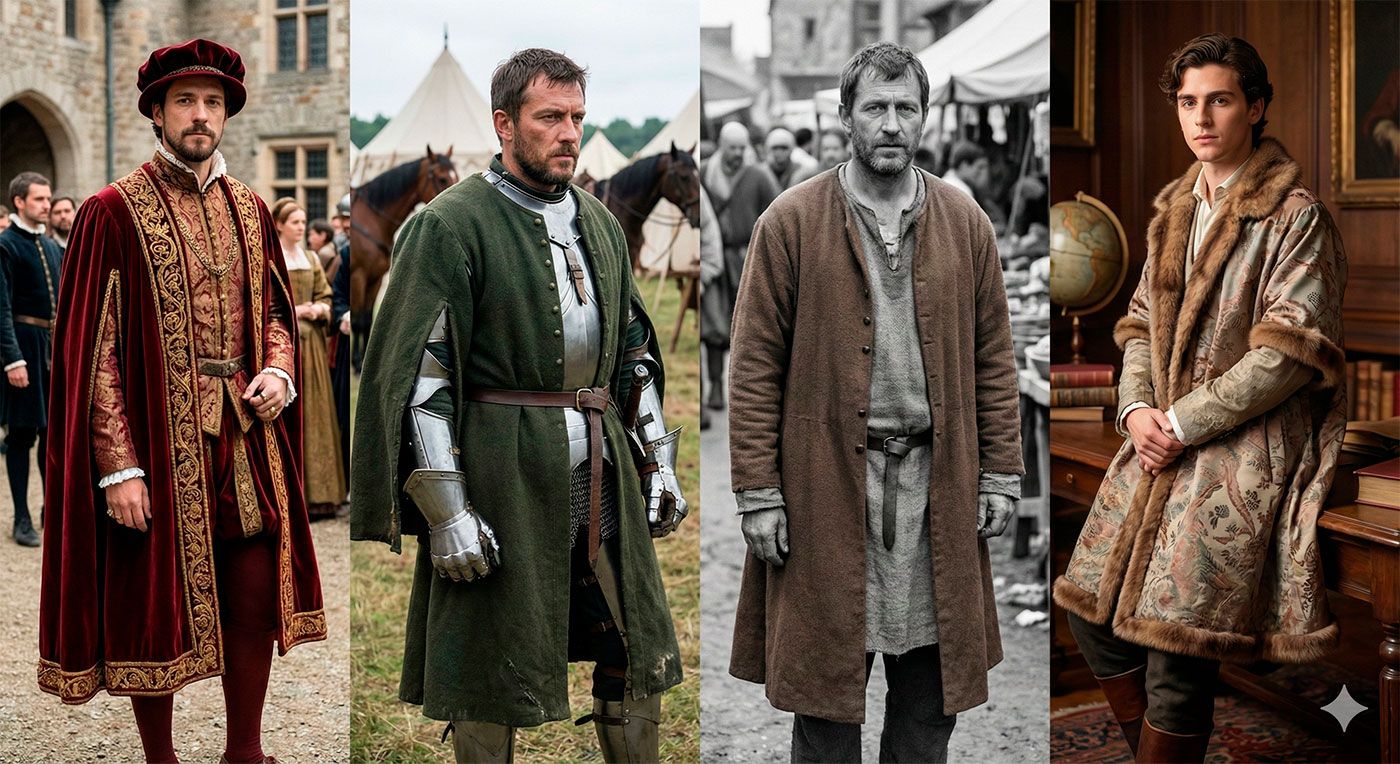
Social groups that wore it
- Knights and tournament participants
- Heralds, pages and kings of arms
- High-status women — in versions over armor or as ceremonial garments —
- Wealthy burghers in civilian adaptations
Evolution: from the huca to the jornea and beyond
From the second half of the 15th century the huca began to transform and be replaced by similar garments with differences in cut and function. These successors include the jornea and the paletoque, and by the 16th century gowns and overdresses with more structured skirts appear.
- The jornea retains the heraldic function but adapts the cut to new fashions with greater fit and variety in sleeves.
- The paletoque (a term used on the peninsula) is a short sleeveless little cloak of Franco‑Italian influence, more practical and compact.
- Later gowns incorporated Eastern fabrics (brocades, satins) and a more sumptuous taste, reflecting economic and aesthetic changes.
| Garment | Period | Form and use | Characteristics |
|---|---|---|---|
| Huca | 14th–15th | Open garment worn over a doublet or armor; heraldic identification | Two joined panels, lappets, sometimes a hood, rich linings |
| Jornea / Paletoque | 15th (second half) | Civil and military evolution; more fitted | Adapted cuts, fewer hoods, greater variety of sleeves |
| Gown | 16th | Civil and sumptuous garment | Skirts, Eastern fabrics, lavish ornamentation |
Legacy and contemporary relevance
The huca is a good example of how a simple garment can acquire multiple functions: practical utility, a symbol of belonging and an element of luxury. Today its study helps to understand social hierarchies, the textile economy and heraldic iconography of the late Middle Ages. Furthermore, its reconstruction in historical reenactment events allows observation of tailoring and usage details that written documents do not always explain.
If one studies the huca, one discovers not only a piece of clothing but a fragment of medieval material culture: how people dressed, how they identified themselves in conflict or ceremony, and which fibers and colors were desirable in each historical moment.