
Shopping Cart
There are no more items in your cart
What is a blazon?
The blazon is much more than a pretty drawing: it is a visual and technical language that allows coats of arms to be described, transmitted and reconstructed with precision. It arises from heraldry, the medieval discipline that devised rules and vocabulary to identify families, institutions and cities through repeatable and recognizable symbols. Through the blazon identity, lineage and honor are narrated using colors, charges and positions that have historical and symbolic meaning.
Definition and scope
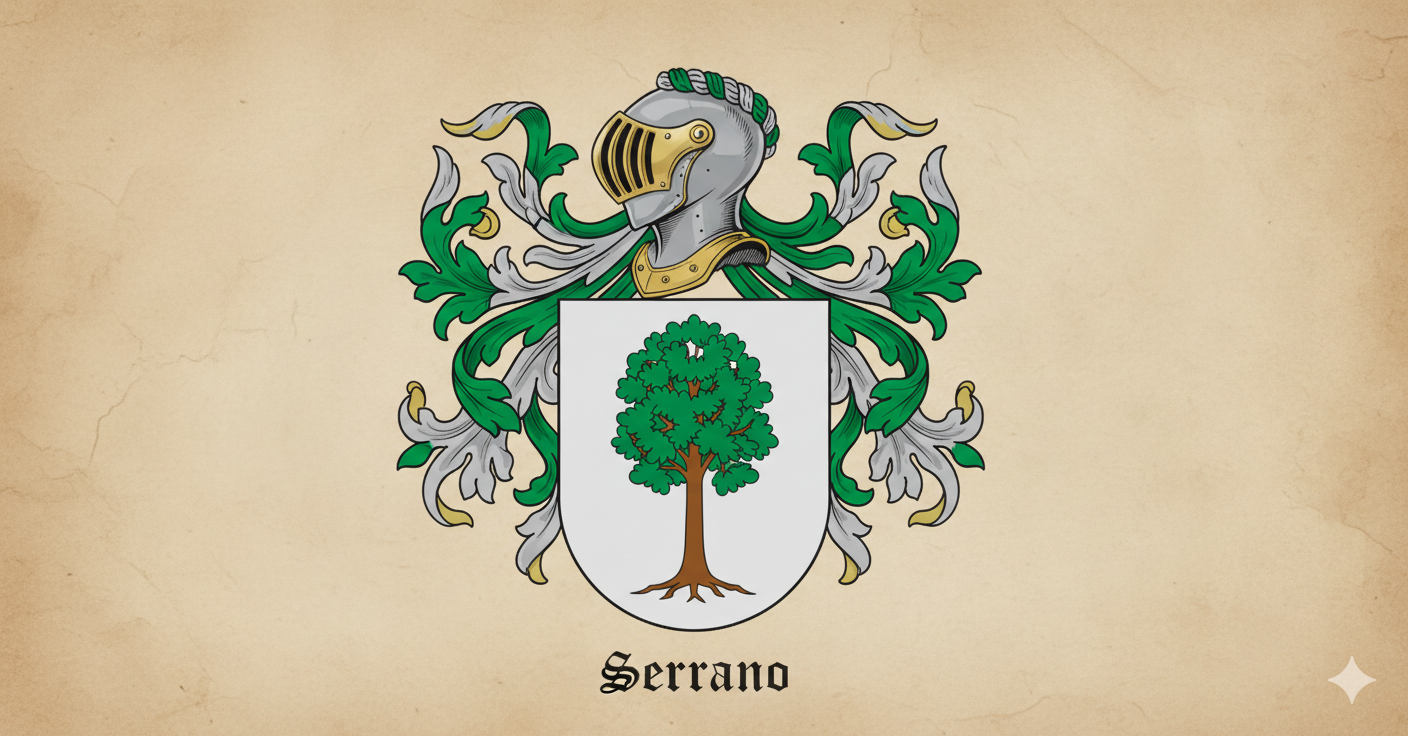
Strictly speaking, a blazon is the formal — oral or written — description of a coat of arms using its own specialized terminology. By extension, the term is also applied to the shield itself or to the figures that appear on it. The Royal Spanish Academy records both senses: art and object.
What does “to blazon” mean?
To blazon is the act of drafting a blazon following heraldic rules so that any specialist can recreate the shield exactly from the description. It is a form of visual notation, comparable to a musical score: words that guide the reproducer.
Origin and etymology
The word comes from the French blason, related to the city of Blois (formerly Blesum), famous for shield-making in the Middle Ages. Other etymological hypotheses link the term to Latin or Germanic roots referring to the weapon, glory or a burning torch, concepts consistent with the blazon’s symbolic function.
Basic elements of a blazon
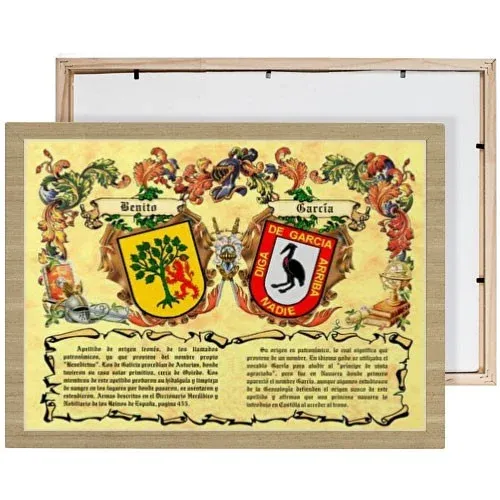
A heraldic shield is composed of several elements that the blazon orders and names. Understanding them makes reading and interpretation easier:
- Field: the background of the shield. It is named first in the description (for example: of azure for blue).
- Tinctures: colors and metals (Or, Argent; Azure, Gules, Vert, Sable, Purpure). An important graphic rule: contrast between metal and color.
- Divisions: divisions of the field (per pale, per fess, checky, etc.).
- Figures and charges: lions, eagles, crosses, fesses, bends, saltires, fleurs‑de‑lis, weapons, animals, etc. Each figure may have a specific attitude (passant, rampant, affronté).
- Crest and accessories: helm/helmet, crown or coronet, mantling, supporters, motto and inescutcheon.
Example of blazoning
A classic example: "Gules, a fess Or charged with three lions passant Purpure".
Order of reading: first the field (Gules), then the principal ordinary (a fess Or) and finally the figures that occupy it (three lions passant) with their tincture (Purpure).
Rules and conventions
Heraldry establishes concise conventions to avoid ambiguity:
- Always describe the field first and then the charges.
- Use standard terms for tinctures and charges.
- Respect the principle of contrast (metal on color or color on metal).
- When there are several elements, prioritize the honour piece (the most visually significant).
History and social function
Blazons originated in the 12th century as a practical response: helmets prevented faces from being recognized in battle, so the symbols on shields and banners identified knights and houses. Over time they became marks of intellectual property, signs of legitimacy and genealogical testimony. Governments, corporations, universities and families adopted them as official emblems.
Interpretation and modern uses
Today the blazon remains in use in official and cultural contexts: seals, façades, genealogical documents, municipal or university emblems. It is also an aesthetic resource in design and traditional art, with the difference that classical heraldry demands rules if historical authenticity is intended.
- Reading a shield involves identifying tinctures, charges, attitudes and accompaniments.
- Creating a blazon requires symbolic coherence and respect for heraldic rules if historical fidelity is desired.
| Element | Common meaning | Visual example |
|---|---|---|
| Fess | Belt, military honour | Horizontal band in the central part |
| Cross | Faith, devotion, symbolic weapon | Cross that can occupy the whole shield |
| Lion | Courage and nobility | Lion rampant or passant |
| Inescutcheon | Added distinction or honour | Small shield superimposed in the center |
Tips for those who want to learn to blazon
- Study basic vocabulary: tinctures, charges, divisions and crest.
- Practice with historical examples and compare descriptions with images.
- Consult heraldic treatises to understand nuances (attitudes, proportions, blazoning rules).
The blazon is, therefore, a mixture of art, technical language and history. Knowing how to blazon allows not only the description of a shield, but also the reading of the symbolic identity that conditioned its origin and evolution.