
Shopping Cart
There are no more items in your cart

What Is a Mantle and a Cape?
A mantle and a cloak are two outer garments that share apparent similarities, but in practice differ in their cut, social use and symbolic function. Below is a clear and orderly explanation of what characterizes each, how they evolved historically and how to recognize them in artistic remains or historical descriptions.
Basic definitions
Mantle and cloak are sleeveless outer garments worn over the shoulders, but they differ in pattern and connotation:
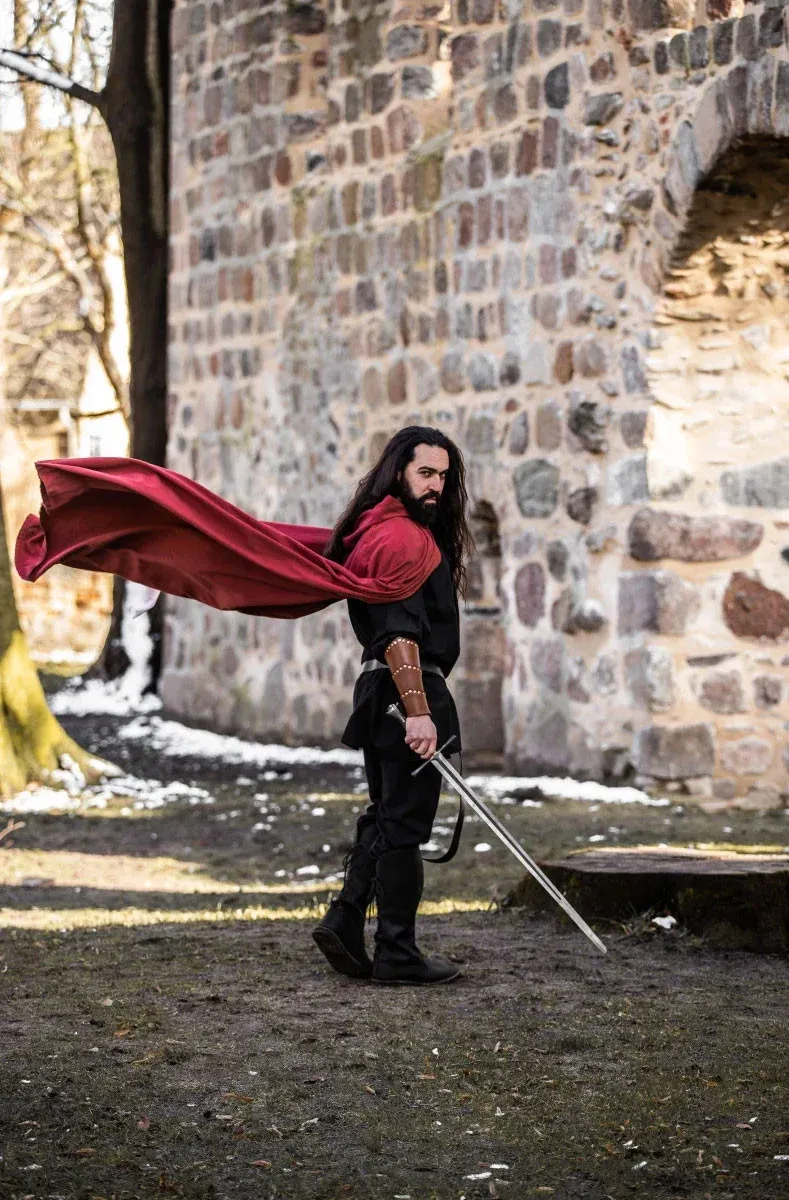
- Mantle: a voluminous garment, often more solemn, designed to cover a large part of the body. Traditionally associated with ceremonial, ecclesiastical or high-dignity functions.
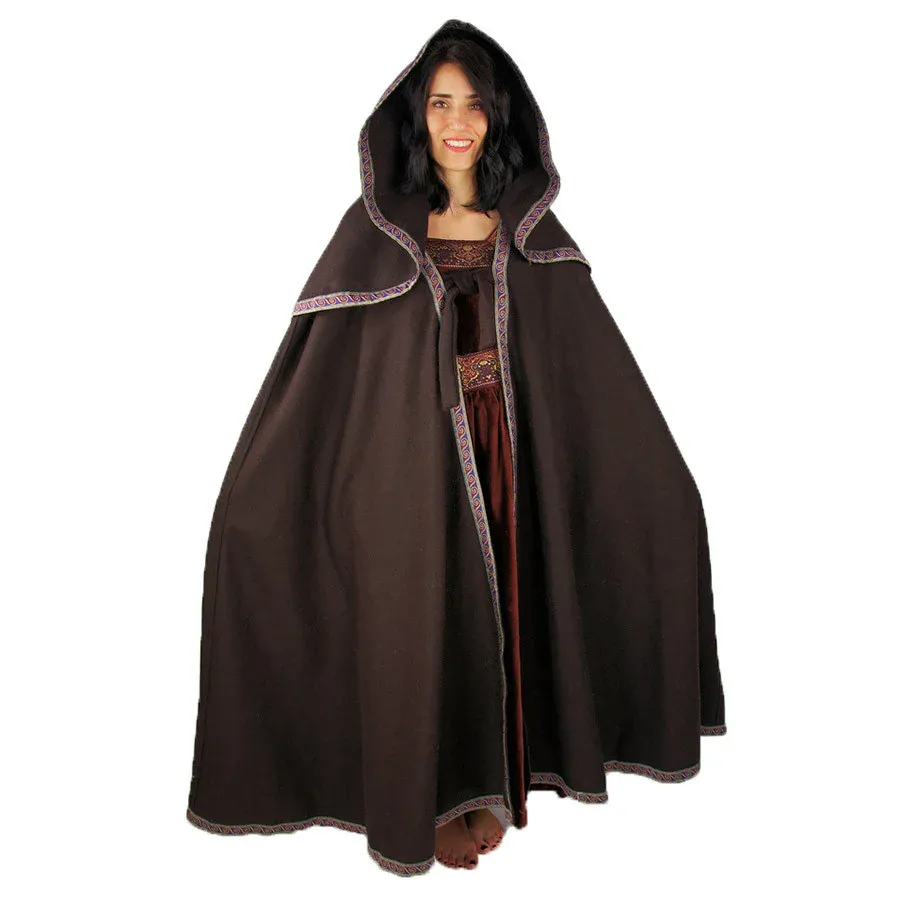
- Cloak: a more practical and functional garment, generally cut in a circular or semicircular shape, intended to protect against wind and rain in everyday use.
Formal characteristics
- Cut:
- Mantle: usually begins with rectangular or semicircular cuts with a neck opening or half-moon to rest on the shoulders.
- Cloak: often has a full circular or semicircular cut, with a front opening or fastening at the neck; some include an integrated hood.
- Length and drape: The mantle tends to be longer and fuller; the cloak may be long or reach only the waist depending on its function.
- Closure and fastening: Both can be closed with brooches, fibulae or cords; the everyday cloak tends to have simpler, more practical solutions.
How to identify them visually
- If the garment appears in ceremonial contexts, with fur linings or ornamentation, it is likely a mantle.
- If the garment shows an integrated hood or a design intended for daily mobility, it is more likely a cloak.
History and evolution
Both garments have ancient roots and their use continued throughout the Middle Ages, although with changes in form and meaning depending on period and region. In the central centuries of the Middle Ages:
- The mantle rose as a symbol of status: semicircular cuts and fur linings (ermine, otter) marked social distinction. Coronation or liturgical mantles became especially elaborate.
- The cloak remained a utilitarian garment: from heavy, lined versions for northern Europe to lighter models in temperate climates.
Materials and construction
The choice of fabrics responded to availability and social status:
- Common people: coarse wool cloths, fulled fabrics to repel water and wind.
- Upper classes: fine wools, linen for linings, silk and velvet (the latter closely associated with the nobility in later phases).
- Ornaments: ceremonial mantles could incorporate embroidery, pearls, gold and gems; their making was laborious and representative of power.
Social and symbolic significance
In hierarchical societies, these garments served as visual markers of status:
- The width of the hem, the quality of the lining or colors imposed by ordinances could identify social orders.
- The mantle was an attribute of dignitaries (kings, bishops, magistrates) and of religious ceremonies; it had iconographic and symbolic functions.
- The cloak could bear lineage colors in military contexts or indicate professional belonging when it adopted simple insignia.
Regional variants
- In cold northern climates, mantles and cloaks lined with fur became widespread; in the Mediterranean lighter versions predominated.
- Typological examples: the Spanish “redondel” (a circular mantle with a side opening and a large fur collar), cloaks with cords crossing the chest or semicircular lordly cloaks.
Practical and ceremonial uses
- Protection against the weather: hoods, lapels and multiple textile layers improved insulation.
- Public or liturgical act: the mantle incorporated iconography and sumptuous materials to emphasize authority and sacrality.
| Characteristic | Mantle | Cloak |
|---|---|---|
| Typical cut | Rectangular or semicircular, wide fullness | Circular or semicircular, more practical |
| Predominant use | Ceremonial, ecclesiastical, regal | Everyday, protection against the weather |
| Typical materials | Silk, fur linings, embroidery | Thick wool, fulled cloths, sometimes fur lining |
| Social association | High nobility, clergy, ceremonies | All social orders; widely used |
Tips for identifying them in art and sources
- Observe the context: religious or courtly iconography usually indicates a mantle.
- Pay attention to the closure and the hood: presence of an integrated hood suggests a practical cloak.
- Analyze ornaments and linings: rich linings and embroidery point to ceremonial use.
Understanding the difference between mantle and cloak helps to better interpret paintings, sculptures and historical documents, as well as to distinguish between practical functions and symbolism in ancient dress.