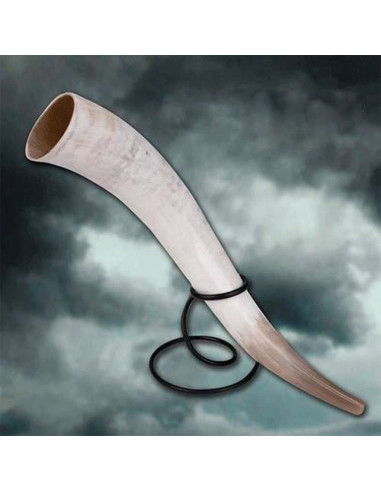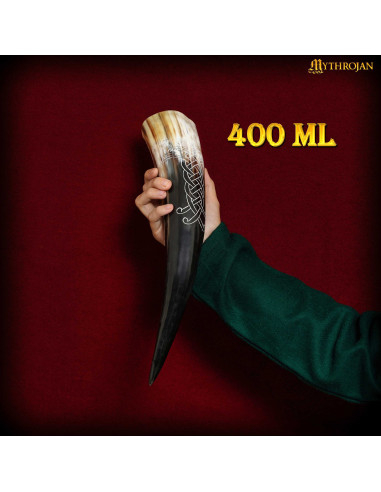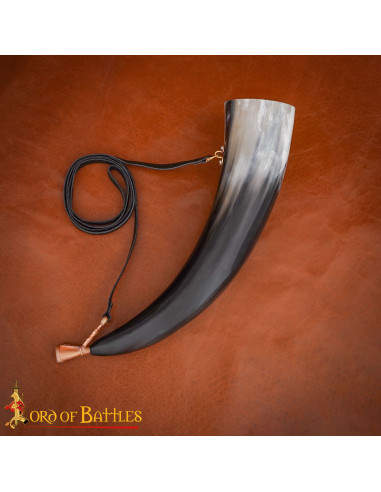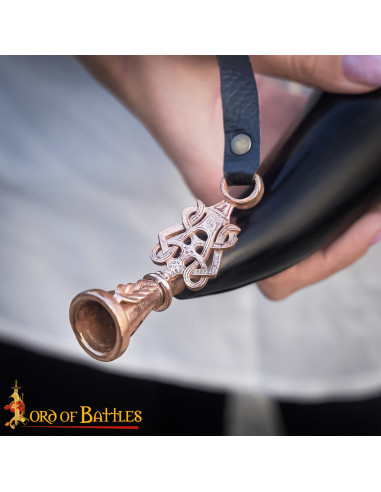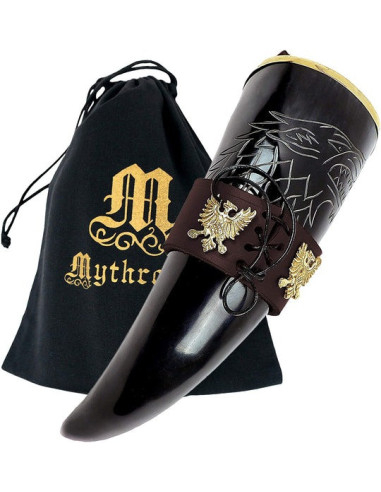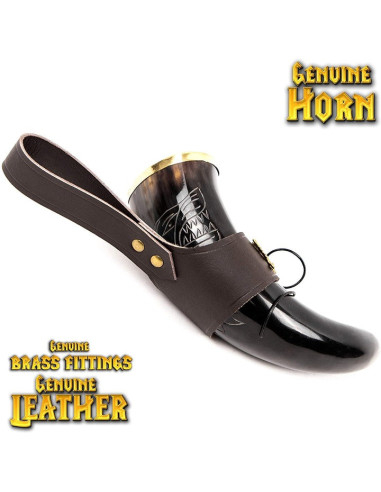
Viking horn Odin riding Sleipnir with support (200-300 ml.)
Envío: CONSULTAR
Envío: 1-2 SEMANAS
Envío: 2-3 SEMANAS
Envío:
1 SEMANA
Envío:
2 SEMANAS
Envío: Menos de 1 SEMANA
Envío:
Menos de 1 SEMANA
0
unidad
unidades
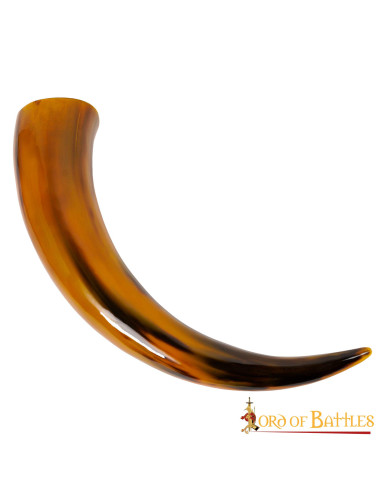
Usually made of buffalo horn, and used as a drinking vessel in many cultures in different time periods, the drinking horn held great significance, especially for ceremonies. It continued to be used until the early modern period, especially throughout Germanic Europe.
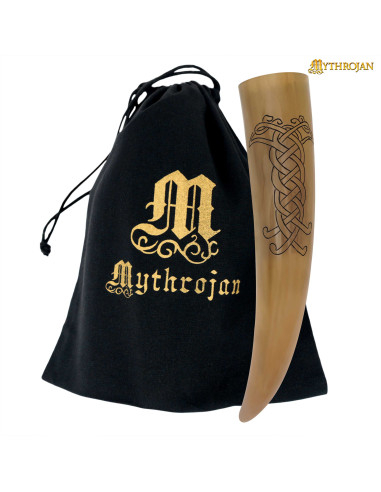
The drinking horn we offer here is handcrafted from cattle horn, polished and embellished with an engraved motif of Odin riding his legendary eight-legged horse Sleipnir (or Sleipner).
Whether in a modern home or to recreate a medieval or Viking setting, this rustic and highly decorative drinking vessel will be an eye-catcher on any dining table.
For hygienic reasons the horn is sealed on the inside with a food-safe varnish so you can enjoy your favorite ale (or mead) to the fullest.
Features
| Material | Cuerno de Búfalo |
|---|---|
| Weight | 300 gr. |
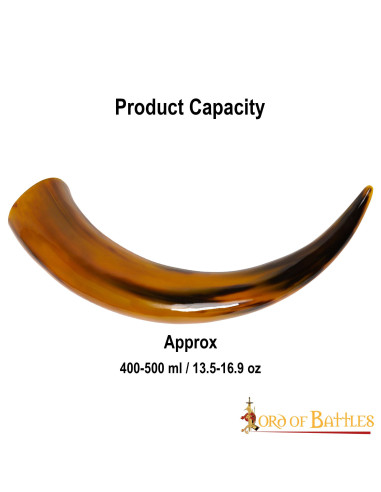
| Capacity | 200-300 ml. |
- Credit Card
- Google Pay
- Apple Pay
- Paypal
Inquiry about Viking horn Odin riding Sleipnir with support (200-300 ml.)
Reference: 214210000
Usually made of buffalo horn, and used as a drinking vessel in many cultures in different time periods, the drinking horn held great significance, especially for ceremonies. It continued to be used until the early modern period, especially throughout Germanic Europe.
The drinking horn we offer here is handcrafted from cattle horn, polished and embellished with an engraved motif of Odin riding his legendary eight-legged horse Sleipnir (or Sleipner).
Whether in a modern home or to recreate a medieval or Viking setting, this rustic and highly decorative drinking vessel will be an eye-catcher on any dining table.
For hygienic reasons the horn is sealed on the inside with a food-safe varnish so you can enjoy your favorite ale (or mead) to the fullest.
The design is based on the 8th-century pictorial stone found near Tjängvide on the island of Gotland, Sweden, and is now on display at the Swedish history museum (Statens historiska museum, also known as Historiska museet) in Stockholm. Although the motifs depicted on the Tjängvide image stone still leave room for interpretation to this day, most scholars generally identify the warrior on a steed appearing to the right in the upper field of the stone as the Norse father of the gods sitting on top of Sleipnir.
A particularly popular drinking vessel during the early Middle Ages in Scandinavia, it enjoyed mentions in both the Prose Edda and the Poetic Edda. Although Viking Age horn fragments are rarely recovered in archaeological excavations, the number of surviving metal horn fittings suggests that their use was much more widespread than actual horn finds indicate.